


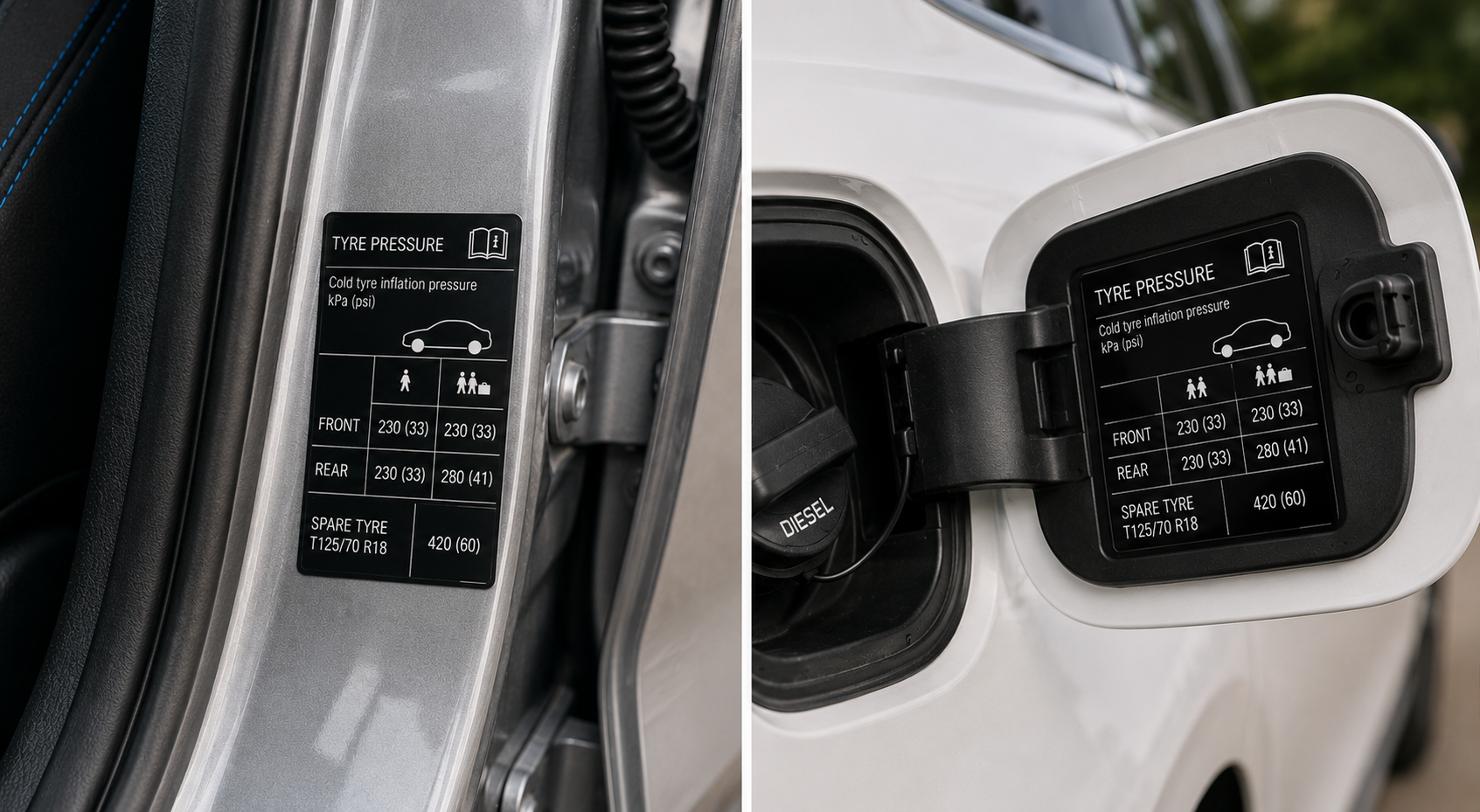
Many drivers know they should check their tyre pressures, but fewer know what the correct pressure actually is. It’s easy to assume the number printed on the sidewall of the tyre is the right one, but that’s a common misconception.
Using the correct tyre pressure helps your vehicle perform as intended, improves tyre life and can even reduce fuel consumption. Whether you’re driving to work, heading off on holiday or towing a caravan, keeping your tyres inflated to the manufacturer’s recommended pressure is one of the simplest vehicle checks you can make.
Where Can You Find the Correct Tyre Pressure?
The correct tyre pressure is set by your vehicle manufacturer, not the tyre manufacturer. This recommendation takes into account the vehicle’s weight, suspension, handling and braking characteristics.
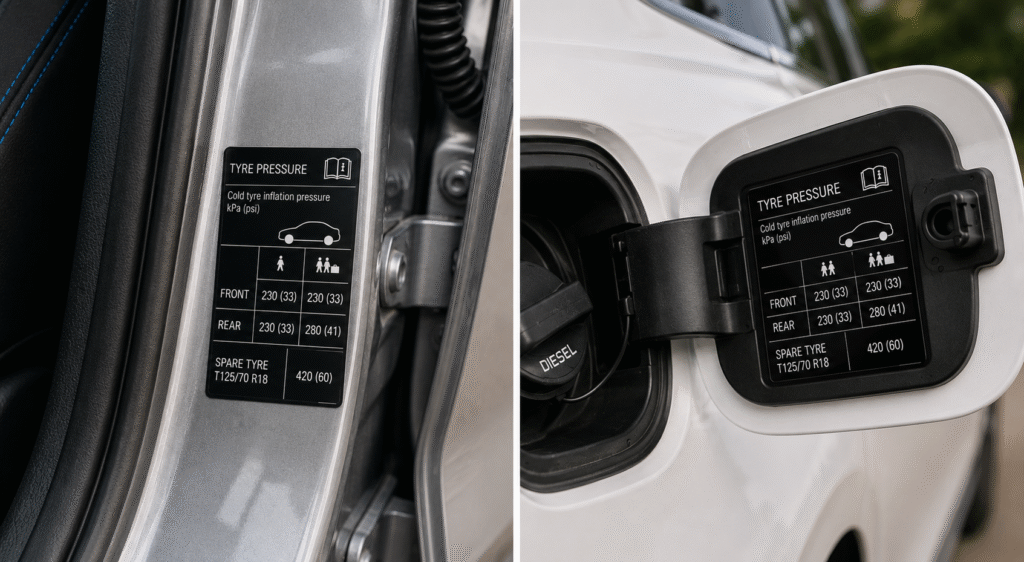
You’ll usually find the recommended tyre pressures in one of the following places:
- Inside the driver’s door frame.
- On the inside of the fuel filler flap.
- In the vehicle owner’s handbook.
Some vehicles also provide different tyre pressure recommendations depending on how heavily the vehicle is loaded. For example, you may see one pressure for everyday driving and a higher pressure when carrying passengers and luggage or towing a trailer.
Why the Tyre Sidewall Isn’t the Answer
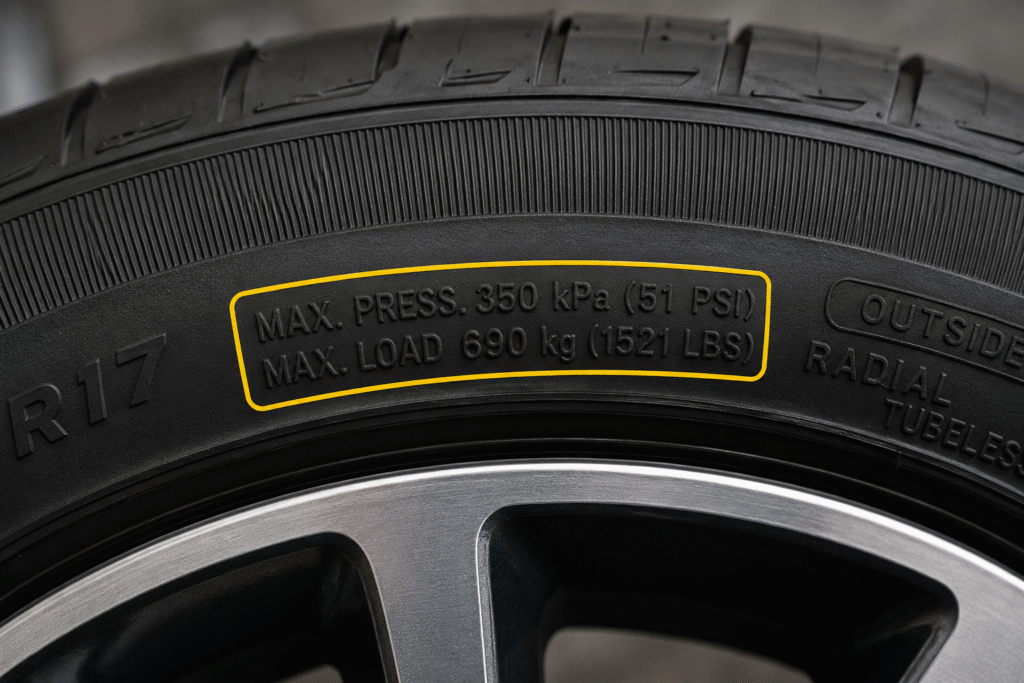
One of the biggest mistakes drivers make is using the pressure printed on the tyre sidewall.
This number is not the recommended operating pressure. Instead, it shows the maximum pressure the tyre is designed to safely hold under its maximum rated load.
Inflating your tyres to this figure could lead to reduced grip, uneven tyre wear and a less comfortable ride. Always follow the vehicle manufacturer’s recommendation instead.
When Should You Check Your Tyre Pressure?
Tyre pressures naturally change over time and are also affected by temperature.
For the most accurate reading, check your tyre pressures when the tyres are cold. This means before you’ve driven, or after the vehicle has been parked for at least a few hours.
It’s good practice to check your tyre pressures:
- At least once a month.
- Before long journeys.
- Before towing a caravan or trailer.
- After significant changes in temperature.
What Happens If Your Tyre Pressure Is Too Low?
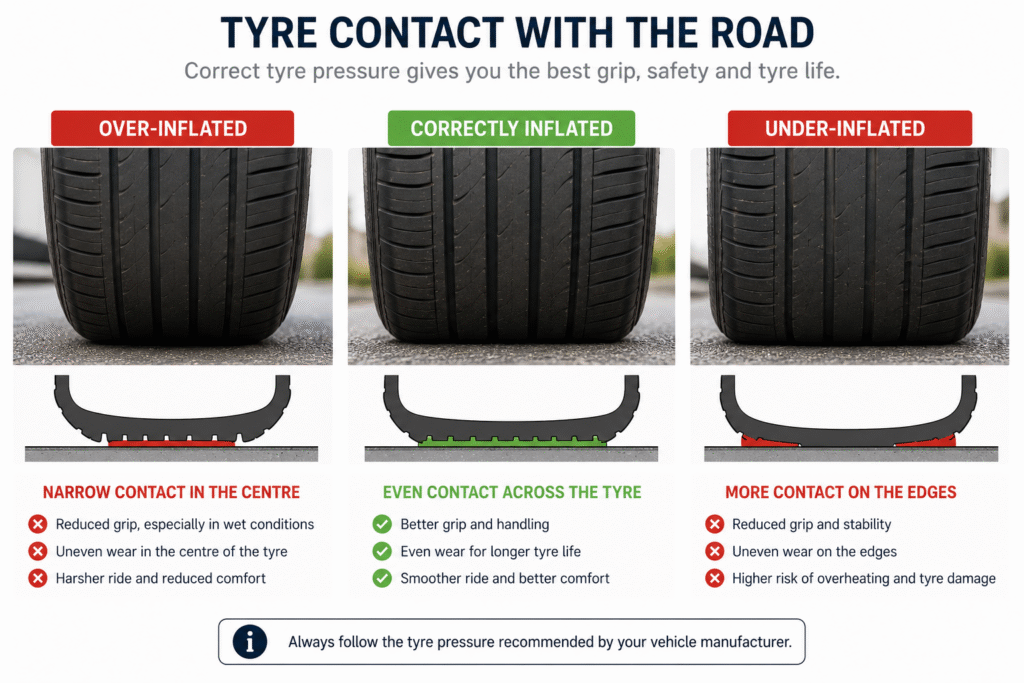
Underinflated tyres create more rolling resistance, meaning your engine has to work harder to move the vehicle. They also generate more heat, which can increase the risk of tyre damage during longer journeys.
Driving with low tyre pressure can lead to:
- Faster tyre wear.
- Reduced fuel economy.
- Poorer handling and steering response.
- Longer braking distances.
- A greater chance of tyre failure.
Modern TPMS systems can alert you as soon as a tyre begins losing pressure, giving you the opportunity to deal with the problem before it becomes more serious.
Our article on “What Happens If You Drive With Low Tyre Pressure?” explains why tyre pressure changes matter and the risks of ignoring them.
Can Tyre Pressure Be Too High?
Yes. While underinflated tyres often receive the most attention, overinflated tyres can also cause problems.
Excessive tyre pressure reduces the amount of tyre in contact with the road, affecting grip and causing the centre of the tread to wear more quickly. The ride may also feel firmer as the tyre absorbs less of the road surface.
Keeping your tyres at the recommended pressure provides the best balance of comfort, handling and tyre life.
Make Tyre Pressure Checks Easier with TyrePal
Checking tyre pressures manually is still important, but it isn’t always convenient. Pressure can change while you’re driving due to a slow puncture, damaged valve or impact with road debris.
A TyrePal Tyre Pressure Monitoring System (TPMS) continuously monitors the pressure and temperature of each tyre while you drive, providing an early warning if something changes unexpectedly.
Whether you own a car, motorhome, caravan, trailer or commercial vehicle, our range of TPMS systems helps you stay informed throughout every journey.
Stay One Step Ahead
Knowing the correct tyre pressure is one of the easiest ways to help keep your vehicle safe, efficient and ready for the road. By checking your pressures regularly and monitoring them while you drive, you can spot potential issues before they develop into costly problems.
Looking for a smarter way to monitor your tyres? Explore the TyrePal TPMS range today and find the right solution for your vehicle.
If you have any questions, get in touch with our team—we’re always happy to help.