


HGV & Bus TPMS – Reliable Tyre Pressure Monitoring for Commercial Vehicles
Tyre pressure monitoring systems (TPMS) are essential for maintaining the safety, efficiency, and cost-effectiveness of commercial vehicles such as trucks, HGVs, and buses. At TyrePal, we specialize in high-quality TPMS solutions that offer real-time monitoring of tyre pressure and temperature, helping ensure optimal performance. Our TPMS solutions reduce the risk of blowouts, improve fuel efficiency, and lower maintenance costs, all while keeping vehicles roadworthy and compliant to safety standards, ensuring fleets stay safely on the move.
Why TPMS Matters for Trucks, HGVs, and Buses
Driving a large vehicle with incorrect tyre pressure can lead to poor fuel efficiency, increased tyre wear, and even dangerous blowouts. Our HGV, truck, and bus TPMS solutions are designed to help drivers and fleet operators stay on top of tyre health, reducing downtime and unexpected failures.
Our systems monitor tyre pressure from 2 to 22 wheels, with a pressure range of up to 188 psi (13 bar). Unlike some systems that only transmit while driving, our commercial vehicle sensors keep sending data even when the vehicle is parked. This means tyre pressures and temperatures are available before loading, helping drivers make informed decisions before setting off.
TPMS Regulation Changes From July 2024
From July 2024, new regulations require all newly registered commercial vehicles, including trucks, HGVs, and buses, to be equipped with a TPMS. This legislation aims to improve road safety, reduce tyre-related accidents, and promote fuel efficiency. By ensuring that tyres are correctly inflated at all times, the regulation helps lower emissions and prolong tyre life. Fleet operators and drivers must comply with these changes to meet safety standards and avoid penalties.
Benefits of Using TyrePal’s TPMS
- Better Fuel Efficiency – Correct tyre pressure reduces rolling resistance, improving fuel consumption.
- Longer Tyre Life – Avoids unnecessary wear and tear, helping tyres last longer.
- Reduced Downtime – Early alerts on low pressure or high temperatures prevent unexpected breakdowns.
- Safer Journeys – Lower the risk of blowouts and tyre-related accidents.
- Easy Monitoring – Real-time data allows quick checks before and during journeys.
What You Need for a Complete System
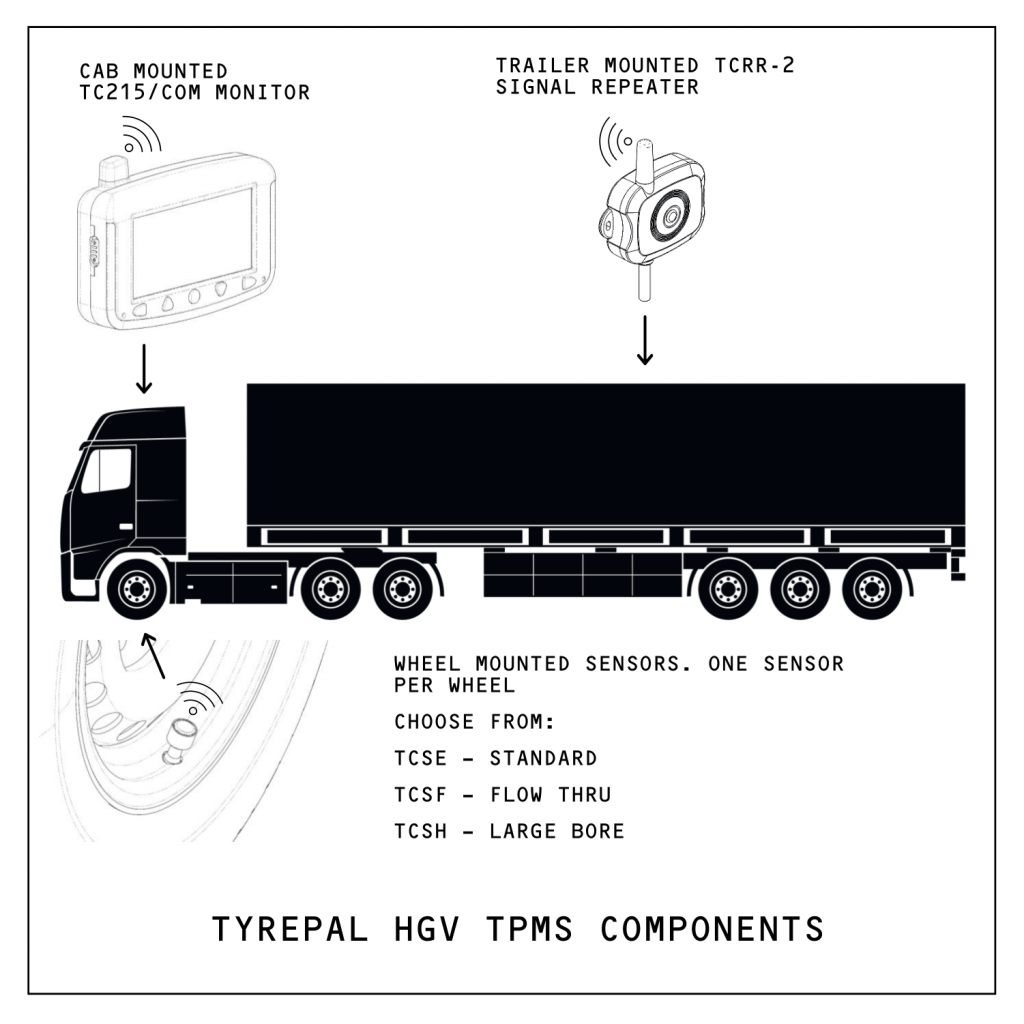
All TyrePal HGV and bus TPMS kits require a TC215 monitor, which provides clear, real-time data on tyre conditions. For larger vehicles, where the distance between the monitor and sensors exceeds 7.0m, you’ll need a TCRR-2 Signal Repeater to boost the signal. Some longer vehicles may require two repeaters to maintain reliable data transmission. On top of monitors and signal repeaters you will need a number of sensors. See below for the types of sensors we offer.
Our TPMS Sensor Options
We offer three different sensor types, each suited to specific commercial vehicle needs:
TCSE Sensors
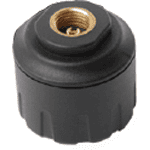
TCSE sensors are our standard heavy duty commercial vehicle external sensor which fits directly onto the tyre valve, making them quick and easy to install. They are ideal for operators who need a simple solution without removing tyres.

TCSF Sensors
The same technology as our TCSE sensor, but featuring a ‘flow-through’ design that allows the tyre pressures to be adjusted without removing the sensor. These sensors are a great option for vehicles that need regular tyre pressure adjustments, such as buses and HGVs that operate long-haul routes.

TCSH Sensors
The same technology as our TCSE sensor, but featuring a thread to suit ‘large bore’ Schrader valves. These are ideal for heavy-duty trucks, industrial fleets, and vehicles operating in demanding conditions.
Find the Right TPMS for Your Fleet
TyrePal’s TPMS solutions help you keep your fleet running safely and efficiently while reducing costs. Whether you need a monitoring system for a single truck or a full fleet of buses, we have a reliable solution tailored to your needs.
Browse our TPMS products for commercial vehicles below, or if you need further help please get in touch via email.